Why Load Boards Should Be Your Backup Plan, Not Your Business Model: A Direct Shipper Acquisition Guide for Serious Carriers
Load boards provide access. They do not provide stability, margin, or enterprise value. Serious carriers are building direct shipper relationships, recurring contracts, and compliance advantages that load boards can never deliver. Here's the operational playbook to make the transition.

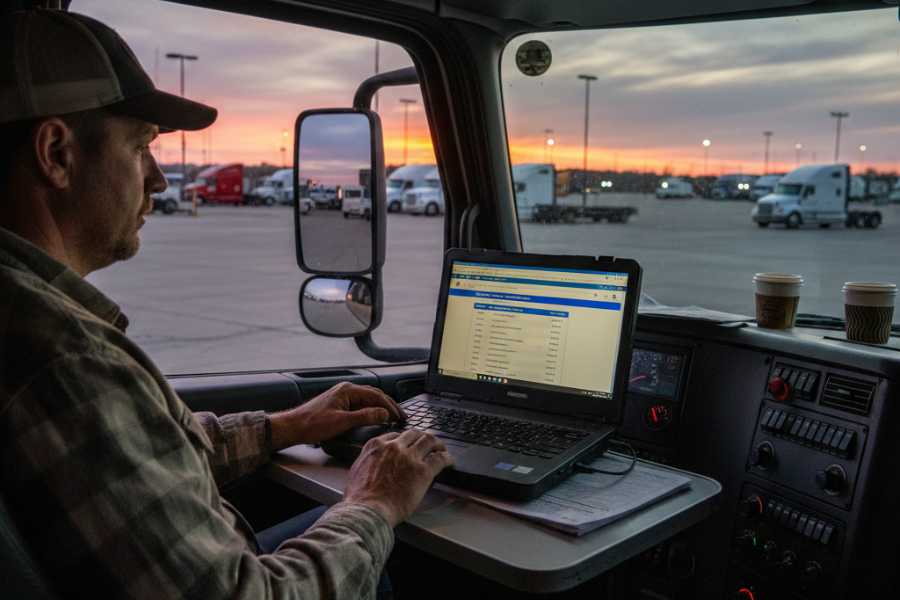
You already know what a load board is. You have probably built weeks, maybe months, of revenue around one. WARP. Curri. OneRail. DAT. Uber Freight. These platforms gave you access when you needed it, and that access felt like momentum.
But access is not a business model. And if your operation depends entirely on board freight to stay afloat, you are not running a logistics company. You are running a gig with a commercial vehicle.
This guide is written for carriers who are ready to close that gap. Not by abandoning load boards overnight, but by building the infrastructure that makes them optional.
The Real Cost of Load Board Dependency
Most carriers measure load board performance in gross revenue. That number can look impressive. The problem is that gross revenue is not what you operate on. Net per mile is.
Consider a brokered load on a regional lane paying $2.80 per mile. Before you calculate profitability, subtract fuel at current diesel rates, insurance allocated per mile, factoring fees if you use a factoring company, and the broker's margin, which is already built into the rate before you ever see the load. What remains is your actual operating margin. On many brokered loads, that number falls between $0.60 and $1.10 per mile after true costs.
Now consider a direct shipper account on a comparable lane where you negotiated the rate without a broker intermediary. The gross per mile may be $2.40 — lower on the surface, but your net per mile after the same cost deductions is $1.60 or higher because the broker layer does not exist. The direct account pays less and nets more.
This is the margin gap that load board dependency obscures. Carriers who build their entire revenue picture around board freight are optimizing for the wrong number.
Beyond margin, load board dependency creates two additional structural problems that compound over time. The first is revenue volatility. Board availability shifts by lane, by season, and increasingly by algorithm visibility. Strong weeks are followed by dry weeks without pattern or warning. This volatility makes cash flow forecasting nearly impossible, which in turn makes equipment planning, driver hiring, and business investment feel like gambling rather than strategy.
The second problem is relationship absence. On a brokered load, the broker owns the shipper relationship. The platform controls your access. You are interchangeable with every other carrier on that board who can match the equipment and rate. Interchangeable operators do not build enterprise value. They fill capacity gaps for someone else's business.
Infrastructure Thinking vs. Marketplace Thinking
The distinction between a marketplace operator and an infrastructure operator is not about equipment size or years in business. It is about where daily attention goes.
A marketplace operator starts each day by refreshing boards, checking rates, and competing for the next available load. Every decision is reactive. Revenue is the result of availability, not strategy.
An infrastructure operator starts each day managing relationships, following up on outreach, monitoring contract performance, and identifying the next direct account opportunity. Revenue is the result of systems, not luck.
The shift in mindset precedes the shift in revenue. Before you can build direct shipper relationships, you have to stop thinking of yourself as a carrier looking for loads and start thinking of yourself as a service provider offering logistics solutions to businesses with ongoing transportation needs.
That reframe changes everything: how you present your business, how you price your services, how you conduct outreach, and how you close accounts.
Direct Shipper Acquisition: The Deep Dive
This is the work that separates carriers from logistics companies. It is not complicated, but it requires discipline and a timeline measured in months rather than days. Here is the process broken into executable steps.
Step 1: Market Mapping
Before you make a single outreach call, you need to understand your local freight landscape. Within a 50 to 100 mile radius of your base of operations, identify the industries that ship consistently, value reliability over lowest bid, and are underserved by large national carriers who have minimum volume requirements you do not.
The most productive sectors for small carriers pursuing direct accounts are regional manufacturing plants with recurring outbound freight needs, medical and pharmaceutical suppliers with time-sensitive and compliance-driven shipping requirements, food distributors and cold storage facilities with recurring delivery schedules, aerospace and automotive parts suppliers with expedited and just-in-time freight needs, and specialty retail distributors with seasonal volume peaks.
Your goal in this step is to build a prospect list of 20 to 30 businesses in your area that fit these categories. Use Google Maps, local business directories, chamber of commerce member lists, and LinkedIn to identify companies and locate the right contacts within them.
Step 2: Research Before Outreach
The carriers who fail at direct shipper acquisition fail at this step. They build a list and immediately start calling. Professional outreach requires preparation.
Before you contact any prospect, research their operation. Understand what they make or distribute, where their freight likely goes, whether they have seasonal volume peaks, and whether they have experienced any known supply chain disruptions that a reliable regional carrier could address. LinkedIn is useful for understanding company size and logistics team structure. Industry news and press releases can reveal expansion plans, new distribution partnerships, or facility openings that signal increased freight needs.
The goal is to arrive at every outreach conversation knowing enough about the prospect's business to speak to their specific needs rather than pitching your general availability.
Step 3: Build Your Capability Statement
A capability statement is a one to two-page professional document that summarizes what your operation offers, what equipment you run, what compliance and insurance standards you meet, and what your service territory covers. Think of it as a resume for your business.
It should include your equipment type and quantity, DOT number and authority status, insurance limits with certificate availability, safety record and CSA score if strong, service radius and primary lanes, any specialized capabilities such as temperature control, liftgate, or hazmat, and two to three brief client references if available.
Your capability statement should look professional. This is not a flyer. It is a business document that a logistics coordinator or operations manager will file and potentially share internally. Invest in clean formatting and accurate information. This document will often be reviewed without you present, so it needs to speak for itself.
Step 4: The Outreach Sequence
Direct shipper outreach follows a three-touch sequence. Email introduction, phone follow-up, and in-person visit when possible.
Your email introduction should be brief, specific, and focused entirely on the prospect's potential need rather than your desire for freight. A strong opening line references something specific about their operation. Your second sentence establishes your credibility and service area. Your third sentence makes a specific and low-commitment ask, typically a 15-minute call to explore whether there is a fit.
Here is a template you can adapt:
Subject: Regional Carrier — [Their City/Region] Freight Coverage
"I noticed [Company Name] distributes across the [region] corridor and wanted to introduce [Your Company Name], a [city]-based carrier specializing in [equipment type] freight for regional manufacturers and distributors. We currently serve several accounts in your area and have availability for consistent lane partnerships. I would welcome a brief call to explore whether our service profile aligns with your shipping needs. Are you available for 15 minutes this week or next?"
Follow up by phone three to five business days after the email. When you reach the right contact, reference the email, confirm they received it, and make the same low-commitment ask. Do not pitch on the first call. The goal is a conversation, not a close.
If geography permits, request an in-person visit after the initial conversation. Showing up in person with your capability statement and a professional presentation signals a level of seriousness that most carriers competing for the same account will not match.
Step 5: The Pilot Run
When a prospect expresses interest, the next step is a pilot run — a short-term, defined engagement that gives both parties a low-risk opportunity to evaluate the relationship before committing to a contract.
Structure the pilot clearly. Propose a specific number of loads over a specific timeframe, typically four to six weeks, at an agreed rate. Communicate your performance standards upfront, on-time pickup and delivery, communication protocols, documentation turnaround, and how you handle exceptions.
During the pilot, perform above expectations on every load. Communicate proactively. Provide proof of delivery promptly. If anything goes wrong, address it immediately and transparently. The pilot is not just about moving freight. It is about demonstrating what it feels like to have your company as a carrier partner.
At the conclusion of the pilot, initiate the contract conversation. Do not wait for the shipper to bring it up.
Step 6: Converting to Contract
A basic carrier-shipper service agreement should cover the lanes and equipment involved, the agreed rate structure and any fuel surcharge provisions, volume expectations or minimums if applicable, payment terms including net days and preferred payment method, performance standards and communication expectations, and terms for rate renegotiation.
Keep the initial agreement simple and focused on the relationship you have established. As the account grows, contracts can be refined. The goal of the first agreement is to move from an informal arrangement to a documented commitment.
If the account represents significant revenue, involve a transportation attorney in reviewing the agreement before you sign. The cost is minimal relative to the protection it provides.
Specialized Niches That Accelerate the Transition
Three sectors deserve specific attention because they offer higher margins, less competition, and compliance-based barriers that work in your favor once you meet them.
Cold chain logistics is expanding across food distribution, pharmaceuticals, and specialty products. Carriers positioned for temperature-sensitive freight access higher margin loads, compliance-focused contracts, and less rate competition from general freight operators. Cold storage facilities and food distributors maintain preferred carrier lists, and building relationships with these facilities creates consistent, recurring opportunities. Entry requires appropriate equipment, insurance coverage aligned with shipper expectations, and temperature monitoring systems. The investment is real, but the margin separation is significant.
Airport freight is one of the most underutilized growth areas for cargo van and sprinter operators. The compliance requirements — background checks, drug testing, security credentials, and TSA or IAC program participation — cause most small carriers to avoid the sector entirely. That avoidance is your opportunity. Air cargo includes expedited parts, medical shipments, international import transfers, and critical supply chain deliveries. Margins are consistently stronger due to urgency and the compliance barrier that limits competition. If you are willing to complete the credentialing process, you gain access to a freight category where gig-level operators cannot compete.
Medical and pharmaceutical logistics require precision, documentation, and reliability above almost any other freight category. Shippers in this sector are willing to pay premium rates for carriers who can demonstrate compliance, maintain chain of custody documentation, and perform consistently. Entry takes time, but creates long-term account stability that few other niches match.
The 6-Month Transition Plan
Reducing load board dependency is not an event. It is a managed transition that requires you to maintain existing revenue while systematically building replacement infrastructure. Here is what that looks like month by month.
In month one, maintain your current board revenue without interruption. Simultaneously, complete your market mapping and build your prospect list of 20 to 30 targets. Finalize your capability statement. Set a weekly outreach target of five to eight contacts.
In month two, begin outreach in earnest. Send your first wave of email introductions and make your follow-up calls. Track every contact in a simple spreadsheet: company name, contact name, date of first outreach, response status, and next action. Expect a response rate of 10 to 20 percent. That is normal. Stay consistent.
In month three, you should have at least two to three conversations in progress and ideally one pilot opportunity taking shape. Secure your first pilot run by the end of this month if possible. Continue outreach to new prospects while nurturing existing conversations.
In months four through six, focus on converting pilot runs to contracts and continuing to add new prospects to your pipeline. Your goal by the end of month six is to have 30 to 50 percent of your revenue coming from direct accounts. Load boards remain active throughout this period as gap-filling tools, but they are no longer your primary revenue strategy.
Cash flow during the transition requires attention. Direct accounts typically pay on net 30 terms, which creates a timing gap if you are accustomed to quick-pay options through load boards. Plan for this by maintaining a cash reserve or continuing to use factoring selectively during the transition period.
Building Enterprise Value From Day One
A carrier dependent entirely on load boards owns no transferable business assets. If you stepped away from operations tomorrow, the revenue would stop immediately because it is tied to your personal availability on a platform, not to contracts, relationships, or documented systems.
A carrier with direct shipper contracts, recurring lane history, documented compliance systems, and professional operational infrastructure owns a business that has value independent of any single person's daily activity. That business can be expanded through additional equipment, attractive to investors or lenders, and potentially acquired by a larger operator at a multiple of earnings.
Enterprise value is built through contracts, not loads. It is built through documented systems, not institutional knowledge held in someone's head. It is built through recurring revenue, not transaction-by-transaction availability.
Start building documentation now, even if your operation is still small. Maintain your compliance files, your client communication records, your rate history, and your performance data. Every system you build today becomes an asset that compounds as your business grows.
The Difference Is Structure
A load board is a legitimate tool. It provides entry access, fills scheduling gaps, and generates cash flow during slow contract periods. Use it for those purposes.
Do not let it define your business model. Do not let platform algorithms determine your revenue ceiling. Do not let broker margin structures cap your earning potential indefinitely.
Serious operators build compliance advantages, relationship capital, recurring contracts, and specialized service niches. They build infrastructure. Infrastructure creates stability. Stability creates margin. Margin creates growth.
The difference between a side hustle and a logistics company lies in structure. You are reading this because you are ready to build the structure.
Ready to Build Your Direct Shipper Strategy?
If you want a personalized roadmap, your market, your equipment, your lanes, your outreach plan, and your 90-day action steps, that is exactly what the 90-Minute Strategy Session delivers.
You bring your operation. We build the plan together.
Book Your 90-Minute Strategy Session,