Photography Tips for Selling Candles Online
When selling candles online, your photos do the selling. Customers can’t smell your product, so your images must communicate warmth, quality, and intention.

(And the Simple Template That Makes It Easier)
In the candle business, your photography does more than show a product; it has to sell a feeling. Customers can’t smell your candle through a screen, so the image has to do the heavy lifting. It needs to communicate warmth, quality, intention, and mood in a single glance. Too often, candle makers focus on the scent profile and packaging while treating photography as an afterthought. But online, photography is the storefront. If your images don’t stop the scroll, the candle never gets a chance.
Good candle photography isn’t about having the most expensive camera or the trendiest setup. It’s about clarity, consistency, and storytelling. When your photos align with how you want customers to feel, they create trust, and trust is what converts browsing into buying.
The first rule of selling candles online is to prioritize light over equipment. Natural light will almost always outperform artificial lighting for product photography, especially for candles. Soft, indirect daylight near a window creates depth without harsh shadows and preserves the true color of your wax and vessel. Overhead lighting and camera flashes tend to flatten the image and introduce glare, which can make even high-quality candles look cheap. Photograph during the same time of day whenever possible to maintain consistency across your brand.
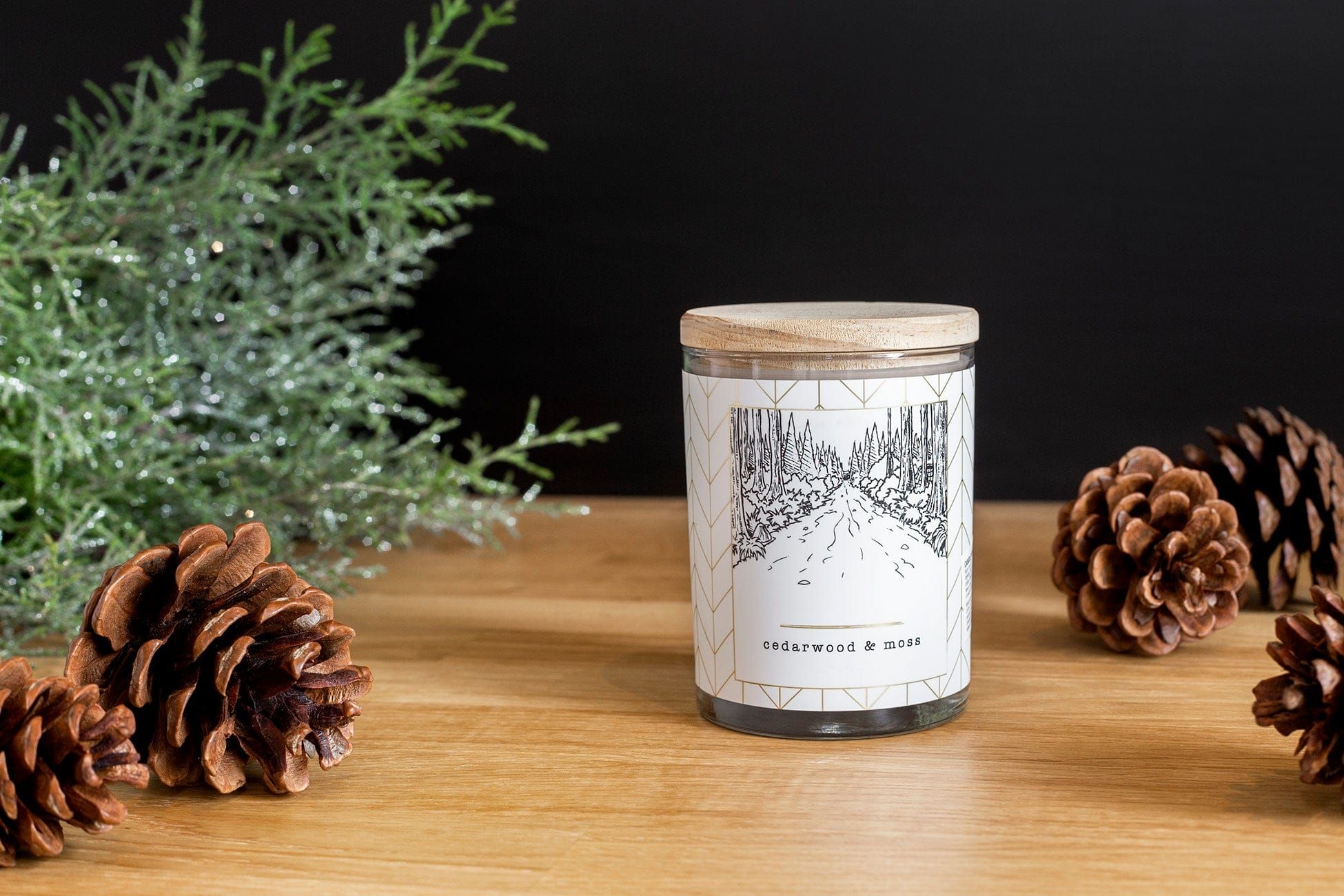
Backgrounds matter more than most people realize. Your candle should be the focal point, not the environment competing with it. Neutral backgrounds—cream, linen, wood, stone, or soft matte surfaces- allow the product to stand out while still feeling intentional. A cluttered background confuses the eye and distracts from the candle’s details. If you use props, they should reinforce the story of the candle, not overwhelm it. A coffee mug, a book, or a sprig of greenery can add context, but too many elements dilute the message.
Composition is where most candle photos quietly fail. Centering a candle in every frame may feel safe, but it quickly becomes boring. Slightly off-center compositions, angled shots, and close-ups of texture add visual interest and dimension. Customers want to see the wick, the wax surface, the label details, and the vessel shape. These details signal craftsmanship. If your candle is hand-poured, your photos should show evidence of that care, even subtly.
Lifestyle images are just as important as clean product shots. A candle sitting alone on a white background tells customers what it is. A candle styled in a living space tells them where it belongs in their life. Lifestyle photos help customers imagine your candle in their home, on their desk, or as a gift. This emotional connection is often what tips the decision from “I like it” to “I’m buying it.”
Consistency is what turns good photos into a brand. When your images share the same lighting, color tone, and mood, your shop looks professional and trustworthy. Inconsistent photography, even if each image is decent on its own, can make a brand feel scattered. Customers may not consciously identify why, but inconsistency creates hesitation. A consistent visual language removes friction from the buying process.
Editing should enhance, not transform. Minor adjustments to brightness, contrast, and warmth are usually enough. Over-editing can distort candle colors and make products look different in real life, which leads to disappointment and returns. The goal is accuracy with polish, not perfection.

The Candle Photography Template (Use This Every Time)
To make this repeatable, here’s a simple photography template candle makers can use for every launch or restock:
Start with one hero image. This is your main listing photo. Use natural light, a neutral background, and a straight-on or slightly angled shot that clearly shows the candle label and vessel.
Next, capture two detail shots. One should be a close-up of the wick and wax surface. The other should highlight texture, label material, vessel finish, or packaging details.
Then add two lifestyle images. Style the candle in a setting that reflects the scent’s mood. Keep props minimal and consistent with your brand aesthetic.
Finish with one scale or context image. This helps customers understand size, either by showing the candle in a hand, on a shelf, or next to a familiar object.
That’s six images. Enough to build trust without overwhelming the customer.
When you use the same template every time, photography stops being stressful. It becomes a system. And systems are what allow candle businesses to scale without burning out.
Your candle may smell incredible, but online, it sells because it looks like it belongs. Photography bridges that gap.