Documenting Your Process - Part 2 of 8
Most candle businesses don't fail because the product is bad. They fail because the process lives entirely in one person's head. Part 2 breaks down how to document your production so anyone can follow it and get the same result. This is where scaling starts.

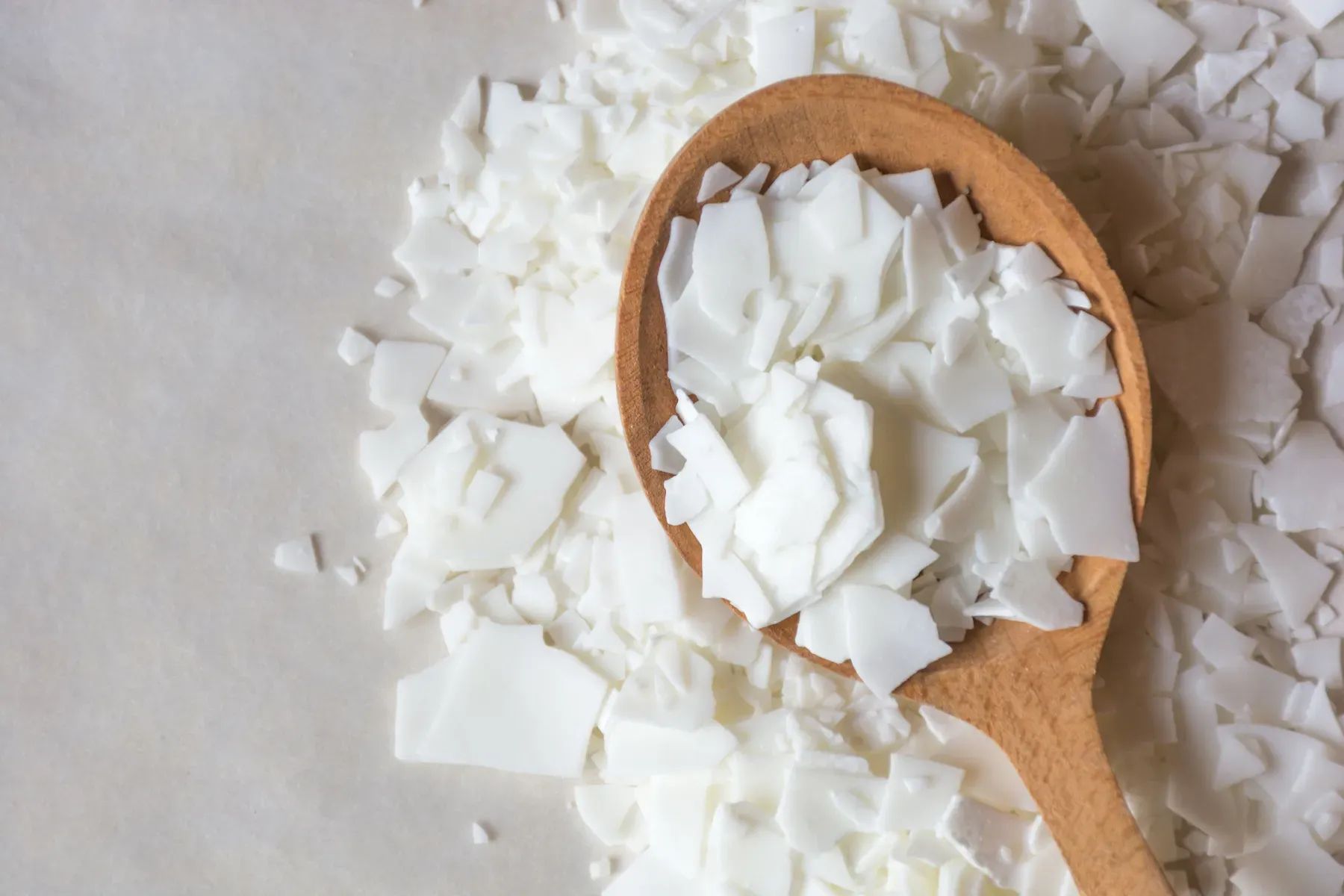
There is a version of your candle business that exists only in your head. It lives in the decisions you make automatically, the adjustments you apply without thinking, the sequence of steps you follow because experience has made them feel natural. You know it so well that it no longer feels like knowledge. It just feels like doing.
That invisible process is both your greatest asset and your most significant vulnerability.
As long as everything lives in your head, your business can only operate through you. The moment production needs to expand, you hit a wall. You cannot hand someone a feeling. You cannot teach intuition by standing beside someone and hoping they absorb what you already know. And you cannot build a business that grows beyond your own capacity if the entire method lives only in your memory.
Documenting your process is not a clerical exercise. It is the foundational act of building a scalable business. It is the moment you take everything you know and make it transferable.
Why most candle makers skip this step
Documentation feels like extra work when everything is already working. If you are making candles, fulfilling orders, and getting consistent results, stopping to write it all down seems unnecessary. You already know what to do.
But that reasoning only holds as long as you are the one doing everything. The moment demand increases, the moment you bring in help, or the moment you are sick, overwhelmed, or pulled in too many directions, the absence of documentation becomes a real problem. Mistakes happen. Batches come out wrong. And when there is no written process to reference, the only way to correct course is through you.
Most candle makers also underestimate how much they actually know. They assume their process is simple enough that it does not need to be written down. But simplicity is not the same as clarity. What feels obvious to you is not obvious to anyone else, and it is not even fully obvious to you until you try to put it into words.
The act of documenting forces precision. It surfaces the decisions you make without realizing you are making them.
What a production SOP actually contains
A Standard Operating Procedure, or SOP, is not a recipe. It is a complete set of instructions that tells someone exactly how to produce your candle from start to finish, including the decisions and conditions that affect the outcome.
A well-written candle production SOP covers the following:
The materials used. Not just the type of wax, but the specific supplier, the grade, and the batch size. Not just fragrance oil, but the exact percentage by weight and the specific scent. Not just a wick, but the size, the supplier, and why that wick was chosen for that vessel.
The equipment involved. The exact pour pot, the thermometer, the scale, the heat source, and any other tools used in production. If the equipment matters to the result, it belongs in the document.
The step-by-step sequence. Every action, in order, with nothing assumed. Melt the wax. Monitor temperature. Add fragrance at a specific degree. Stir for a specific amount of time. Pour at a specific temperature. Allow to cool under specific conditions. Each of these steps has variables that affect the finished candle. The SOP defines them all.
The critical control points. These are the moments in production where getting it wrong has the most significant consequences. Pour temperature. Fragrance load. Wick centering. Cure time. These are not just steps to follow. They are the points in the process that require the most attention, and your SOP should identify them clearly.
The expected outcomes. What does a properly made candle look like at each stage? What should the surface finish look like after cooling? What does correct scent throw indicate? Defining the expected result at key stages gives whoever follows the SOP a way to self-check without coming to you for approval.
How to write it when you have never written one before
The most effective way to document your process is to make a batch of candles while narrating every decision out loud, then turn that narration into a written document.
Do not try to write the SOP from memory. Memory edits. It skips steps that feel obvious and compresses sequences that actually take time. Instead, go through your production as you normally would, and as you work, describe each action in the moment it happens. What are you doing? Why are you doing it at this point and not earlier or later? What are you watching for? What would tell you something is wrong?
Record yourself if it helps. Take notes. Have someone else write down what you say as you say it.
Then take that raw narration and organize it into a clean, numbered sequence. Every step gets its own line. No combining steps. No assuming context. Write it as if the reader has never made a candle before and has no way to ask you a question.
Once you have a draft, test it. Give it to someone else and ask them to follow it without your input. Watch what they do. Where do they hesitate? Where do they ask a question? Where do they make an assumption that leads to a different result? Every one of those moments is a gap in your documentation.
Revise. Test again. The SOP is not finished until someone else can follow it and produce the same result you would.
The difference between a working SOP and one that sits in a folder
Documentation only creates value when it is actually used. Too many businesses invest time in writing a process and then let it collect dust because it was never built into the workflow.
Your SOP needs to be present at the point of production. Not in a binder on a shelf across the room. Not in a Google Drive folder nobody remembers to open. It should be within arm's reach of whoever is making the candles, formatted in a way that is easy to follow mid-process.
Consider a laminated checklist at the workstation rather than a full document. Consider a step-by-step wall guide for the most critical stages. The format matters. If it is difficult to use during production, it will not be used during production.
Your SOP should also be treated as a living document. Every time your process changes, every time you switch a supplier or adjust a formula or change your pour temperature, the document gets updated. A SOP that reflects how things used to be done is more dangerous than no SOP at all, because it creates false confidence.
What this makes possible
When your process is documented, something shifts in how your business operates. You are no longer the only one who can produce your product correctly. You are no longer the single point of failure in your own production system.
Training becomes faster, because there is something concrete to train from. Quality becomes more consistent, because the standard is written down rather than remembered differently each time. Troubleshooting becomes easier, because when something goes wrong, you can trace it back to a specific step.
And perhaps most importantly, you gain the ability to step back. Not entirely, and not immediately, but incrementally. When your process lives in a document rather than in your hands, your business has a foundation it can actually grow on.
This is what Part 1 was pointing toward. The shift from being the person who makes the candle to the person who designs how the candle is made begins here. It begins with writing it down.
In Part 3, we will look at material consistency, the other half of process control, and what it takes to standardize your inputs so your process has something reliable to work with.
© 2026 Published by Evans Cutchmore, an Imprint of The Couvent Collective PBC. All rights reserved.
Kim M. Braud is a strategist, writer, and founder working in the areas of economic power, cultural narrative, and community leadership. With expansive experience across financial services, entrepreneurship, and nonprofit leadership, her writing explores who controls systems, who benefits from them, and who gets left out. Her work centers on economic mobility, institutional accountability, and the stories we inherit, and the ones we choose to dismantle.